Design basis
01Record destination wind, snow, seismic, storeys, foundation interface, and applicable code before technical pricing.
Modular technology sourcing
Digital design and factory integration can improve repeatability when they are documented. Reds10 coordinates supplier comparisons around the drawing revision, design basis, first-unit checks, service boundaries, and transport plan. A model render alone does not show that a module can be produced, lifted, shipped, and permitted for your site.
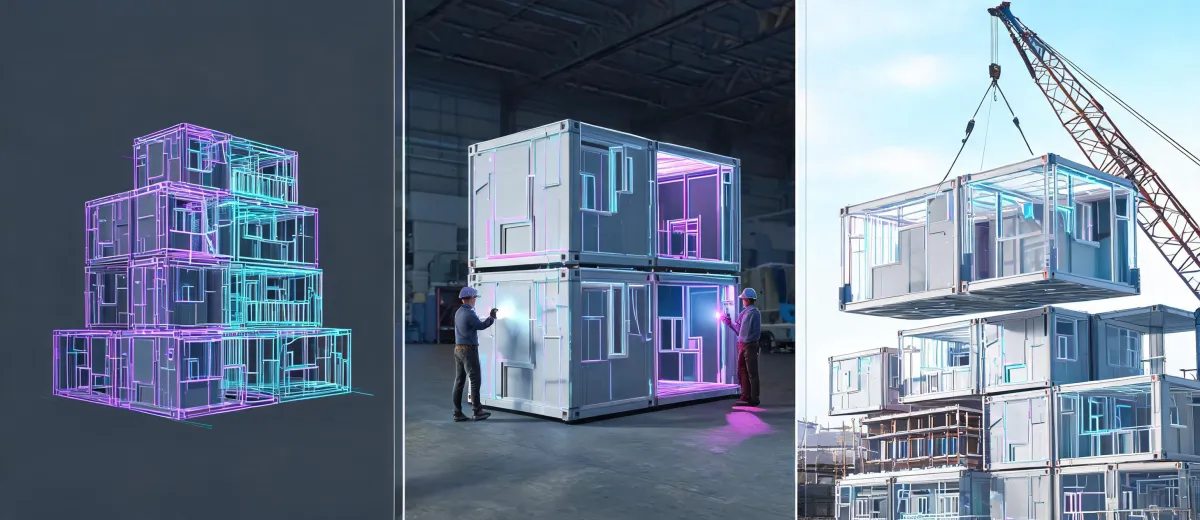
The fields below are review checkpoints, not claims of performance or audited percentages. A shortlisted supplier should submit evidence against the same brief so competing options can be compared on equal terms.
Record destination wind, snow, seismic, storeys, foundation interface, and applicable code before technical pricing.
Request coordinated module geometry, opening locations, lifting points, and a drawing register with revision status.
Identify which MEP items the supplier proposes to install and test, and where site work begins.
Compare welded volumetric units with bolted kits using actual packing dimensions, handling points, and road limits.
The buyer may appoint a third-party inspector to witness first-unit measurements or document reviews. Any percentage, throughput claim, certification, or tolerance offered by a supplier must be checked against records for that supplier and the proposed building system.
Confirm the grid, structural connections, service penetrations, change log, and the point at which drawings are approved for the first unit.
Request loading drawings for the proposed geometry. A flat-pack count for one layout cannot be carried over to a unit with stairs, wet rooms, or different panel thickness.
Ask for declared panel values, thermal bridge details, and reports for the specified wall assembly. Doors, joints, and penetrations require separate consideration.
Compare a supplier's released drawing with its sample, first unit, inspection report, and packing list. If the wall panel changes from PIR to mineral wool, update mass, thermal assumptions, and any fire evidence. If a welded frame changes to a bolted kit, recheck connection torque, corrosion protection at cut edges, and installation labor. Those changes can alter lead time and the 40HQ calculation. Reds10 tracks the comparison and coordinates questions; the supplier and appointed experts remain responsible for engineering and conformity.
Capture the use, dimensions, destination, schedule, and documentation needs. Identify suppliers that can address that exact scope.
Separate shell, envelope, interior, MEP, packing, inspection, and export responsibilities so prices can be compared.
Coordinate buyer-approved material samples and an inspection plan for dimensions, connections, and finish details.
Check packing descriptions, shipment documents, destination port, and outstanding technical records before dispatch.
A portable classroom accepted in one country is not automatically compliant in another. Local fire, accessibility, energy, wind, and permit rules should be reviewed against the destination. Where EN 14509 or another standard is specified, request the relevant supplier declaration and report for the exact panel and assembly offered.
Tell us the model stage, application, country, and expected quantity. We can coordinate comparable supplier submissions and flag documents still missing from the decision.