Engineers reviewing a module set sequence beside a loaded trailer

Solutions

Modular Building Procurement from Brief to Export

A modular building price received before wind, snow, seismic, storey, and destination data is only a budget indication. Reds10 organizes those inputs before requesting comparable supplier quotations. A late stair or corridor change can affect structural scope, shipping volume, and installation sequencing.

Our scope covers supplier matching, quotation comparison, sample coordination, inspection coordination, consolidation, and export document follow-up. The chosen supplier is responsible for manufacture and evidence for its product. Local qualified professionals handle permits, foundation design, and utility approvals.

What to confirm before supplier quotations are compared

Held in the basis sheet

  • Design wind speed, ground snow load, and seismic design basis for the project country.
  • Plan size, storeys, corridor type, and whether the frame is welded volumetric or bolted knock-down.
  • Panel core choice: EPS, PIR, or rock wool, with thickness and the U-value the envelope study is chasing.
  • MEP preinstallation limit: which circuits and pipes stop in the factory, and which remain site works.
Left open on purpose

  • Local code path, including whether the building is filed as relocatable or as permanent modular construction.
  • Foundation interface loads are issued; the pad or strip design stays with the engineer licensed in that place.
  • Compare the fire report for the proposed wall assembly with the project requirements for doors, joints, and penetrations.
  • Interior furniture, medical equipment, and kitchen plant unless they are listed as a separate package.

An external stair change can alter the wind area and transport plan. We ask each shortlisted supplier to identify price exclusions and revision triggers before the buyer accepts a quotation.

Coordination sequence after scope alignment

01

Model lock

Corner posts, lifting points, and service penetrations are coordinated in the model. A clash on a sanitary stack is cheaper here than on the line.

02

Opening unit

Request a first-unit inspection plan from the selected supplier. Coordinate an independent inspection when the buyer approves the inspection scope.

03

Factory MEP

Confirm the proposed factory MEP boundary in drawings and request test records. A supplier lighting package does not imply site HVAC, medical services, or utility connection.

04

Pack and set

Welded boxes and bolted kits use different stow plans. The method statement names pick order so the crane does not lift the roof module before the base module is set.

Packing alternatives and installation interfaces

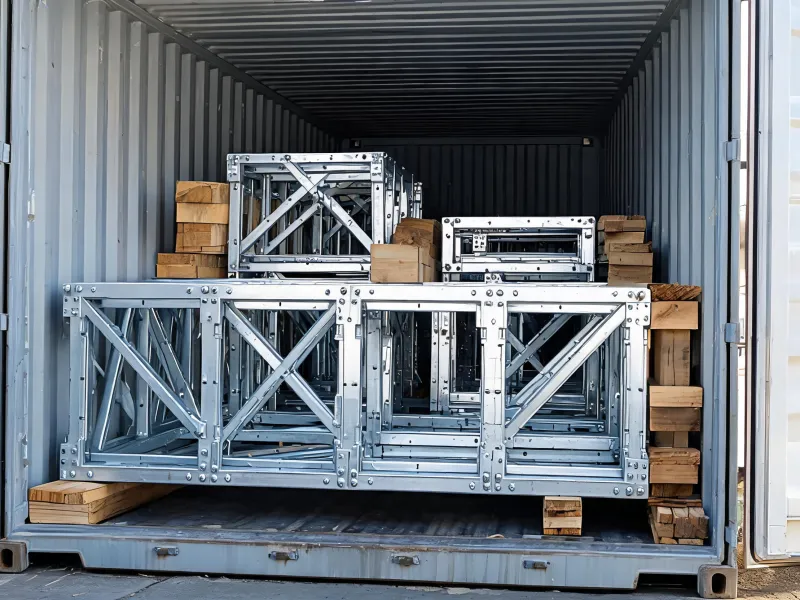
Bolted light-gauge frame parts nested inside a shipping container

Knock-down frames travel denser

A bolted frame can improve packing density. Ask for the proposed unit count per 40HQ and the site bolt torque and alignment procedure. For galvanized steel, request the coating designation and the supplier’s repair instructions for cut edges and any site welds.

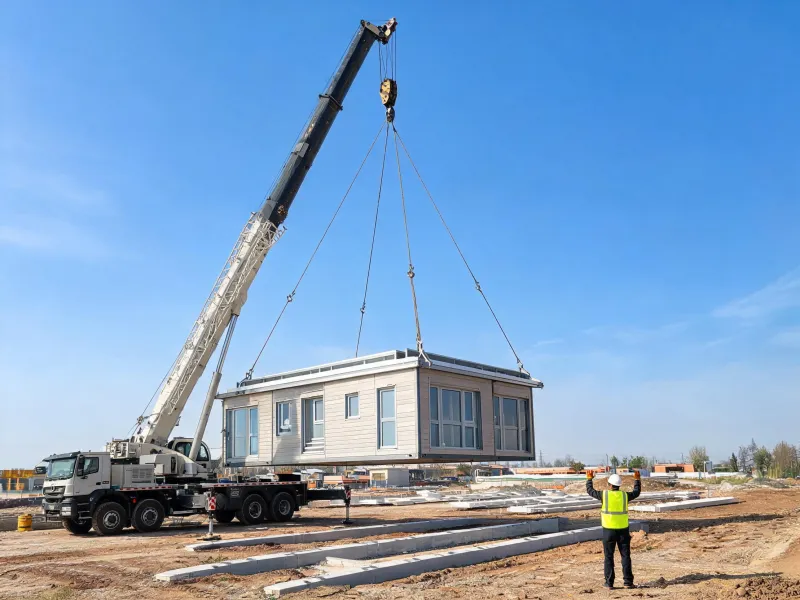
Crane lifting a finished volumetric module onto strip foundations

Welded volumetric boxes set faster

A welded module arrives with the envelope closed and more of the interior already fitted. The carrier needs the packed dimensions of the complete module to assess road restrictions and permits. The supplier must document lifting points for the selected unit, while the local engineer verifies the pad interface.

Two hypothetical RFQs with comparable evidence fields

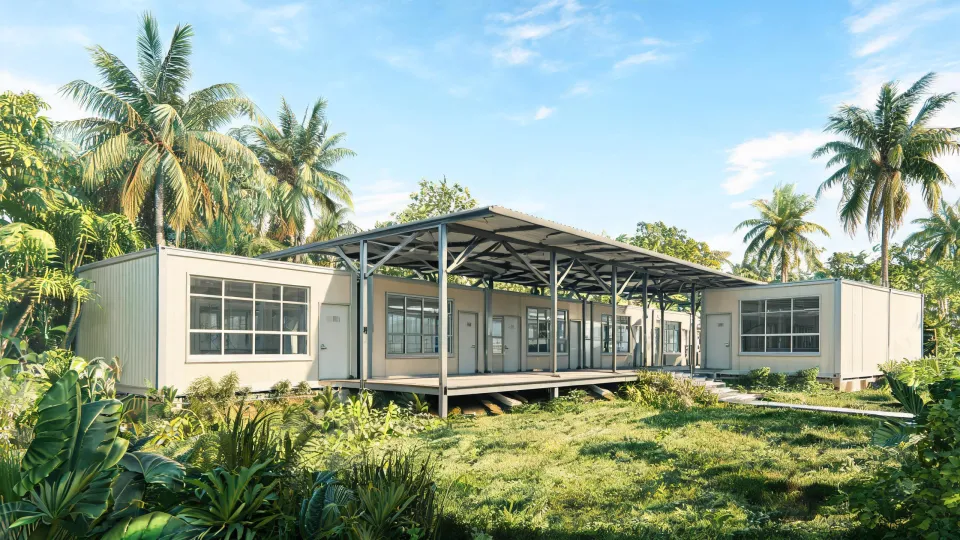
Classroom modules linked by a covered walkway
  • Building type Classroom run
  • Country Indonesia
  • Quantity 24 modules
  • Delivery scope Envelope study, factory, set guide

For a classroom RFQ, ask each supplier to submit a wall U-value and assembly fire evidence for the offered core and thickness. Doors, joints, and penetrations need separate review by the project fire consultant.

Clinic modules with service containers at one end
  • Building type Clinical module
  • Country United Arab Emirates
  • Quantity 16 modules
  • Delivery scope Shell plus factory MEP interface

For a clinic RFQ, request the proposed steel grade and a marked MEP interface. Medical gas and local clinical approvals remain with appointed specialists. Compare the supplier drawing against the scope schedule before purchase.

Request a procurement scope review

We identify missing inputs such as wind, snow, seismic category, storeys, panel core, and destination port. Supplier quotations lacking those inputs remain budgetary until evidence is checked.

  • Road width may block a volumetric box even when the factory can build it.
  • A supplier ISO 9001 certificate, if verified, is a management-system record, not a permit for your site.
  • Panel fire minutes do not travel onto untested joints.

Share the building use, quantity, deployment country, dimensions, loads, finish scope, delivery window, and destination port.